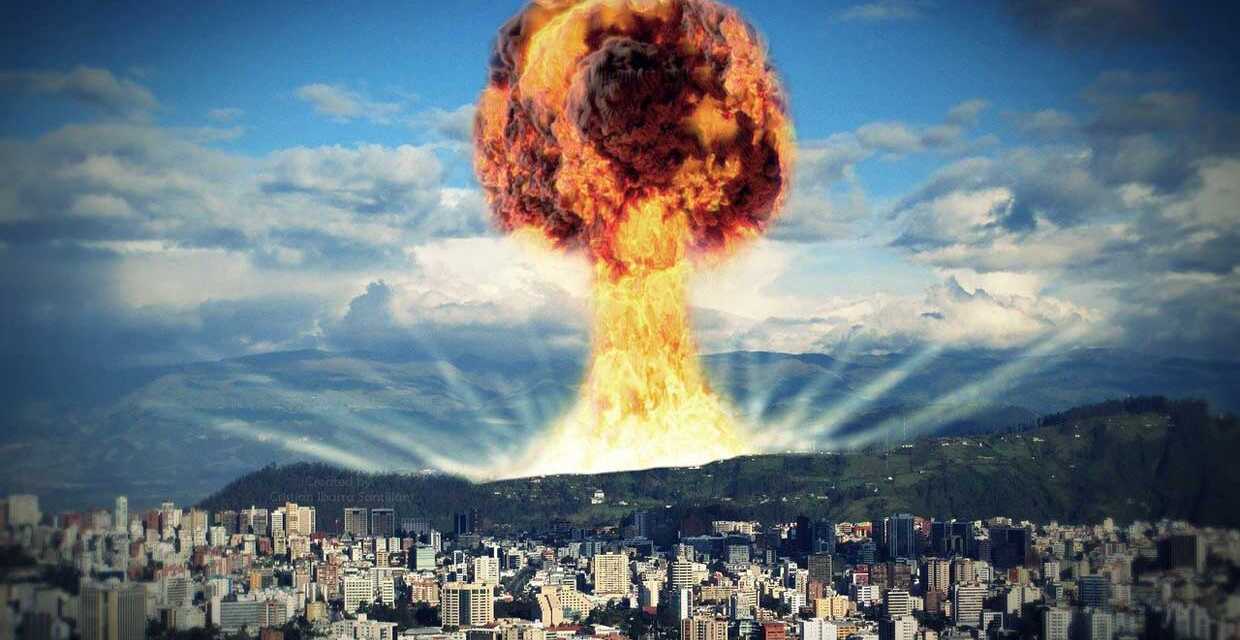
The likelihood of a nuclear war happening is debatable. Many experts are quite reassured that such a scenario is unlikely. Having said that, during the 2022 Russian invasion of Ukraine, President Putin ordered national nuclear weapons to be prepared for increased readiness to launch. Some serious nuclear threats are also coming from North Korea.
A nuclear attack can cause tremendous damage from blast, heat, and radiation. So, preparedness must be taken seriously.
We will share and explain some steps from the “American Ready Campaign” to take in case the worst happens.
1. Get inside a shelter
After hearing the detonation, find the nearest building to hide inside. If you are already at home, don’t stuff a bag and rush to the car because it’s useless.
During the blast, the windows may shatter, the doors may open suddenly, the external walls may cave in. For these reasons, it’s recommended to hide yourself in the middle of the building or in the basement. You will have more chances to be protected from explosion risks like flying debris of glass, dazzle, and thermal burns.
For additional safety, you should avoid rooms with moveable objects in the ceiling that may fall on you.
The stairwell in a large building might be a good place to consider when escaping a nuclear explosion.
The building should be robust enough to protect you. So, find a shelter made ideally of brick or concrete as it can block a lot of radiation.
The good news is that you don’t need a civil defense fallout shelter, all you need is a traditional building to increase your survival chances.
2. Decontaminate yourself
It takes about 15 minutes for the fallout to fall back on the ground, but it depends on many variables like the proximity to the immediate blast zone, winds, etc.
The fallout is the radioactive dust thrown in the air after a nuclear explosion. It may cover a large space if the explosion is big or if there are winds that may sprinkle it over hundreds of square miles.
Your mission, as explained before, is to get inside the nearest shelter you can find before the fallout arrives.
If you have stayed outside enough time to be hit by the fallout, or just for increased safety, you should remove contaminated clothing and wash exposed skin. Also, avoid touching other parts of your body, especially your eyes, nose, and mouth.
You would be better off taking a shower with soap and water to remove fallout from any contaminated skin or hair. If your pets were outside, you will need to brush them to remove fallout debris, then wash them.
3. Stay inside
Now that you are inside a safe shelter, the better thing to do is simply to stay there for 24 hours or till official authorities announce some instructions.
After the blast, the fallout is very risky during the first few hours when the levels of radiation are very high. After some time, it fades out and the danger decreases. So, keep yourself inside the shelter after the detonation for your safety.
As a rule of thumb, practice social distancing of two meters between you and people other than your family members. Keep your pets inside.
During your stay at the shelter, eat food that was conserved in sealed containers like bottles and cans, or covered in the refrigerator or the pantry, make sure that you wipe off containers, utensils, kitchen countertops, table, cookware, …
Avoid food that was exposed to radiation like fruits and veggies in the garden or items in an open floor or an outdoor balcony.
4. Stay informed about the latest news
Don’t keep yourself disconnected completely from the outside. Stay updated with the latest news if you can, especially official news coming from local authorities.
Fortunately, many devices work with batteries and can be available for use in the case of a power outage. Take correct decisions by relying on official recommendations from authoritative sources.
You can use a hand-crank or battery-powered radio, or simply your smartphone to get the latest updates about the explosion, especially when to exit and where to go.
5. Further survival steps
It’s recommended to identify and note a list of safe shelters located near the places that you frequent and where you spend a lot of time.
Monitor your supply kit and make sure it’s available all the time wherever you are. Your package must contain vital elements like bottles of water, food in containers and packages, radio, batteries, chargers, medications, torch, pets’ food, … the list may vary according to what you think is crucial.
Now that you have your complete inventory, you will be less forced to go out to shop.